In Christine Krammer works, the archive is not merely a storage location, but a medium for reflecting on time, memory, and cultural practice. Lost media and personal archive dialogue together, in a constant recontextualisation and generation of new meaning and life breathed into old, quasi-dead material. Diving into her works left me wondering: what constitutes the fabric of collective memory in our post-photographic, media-saturated age? And what role does the artist play in it?
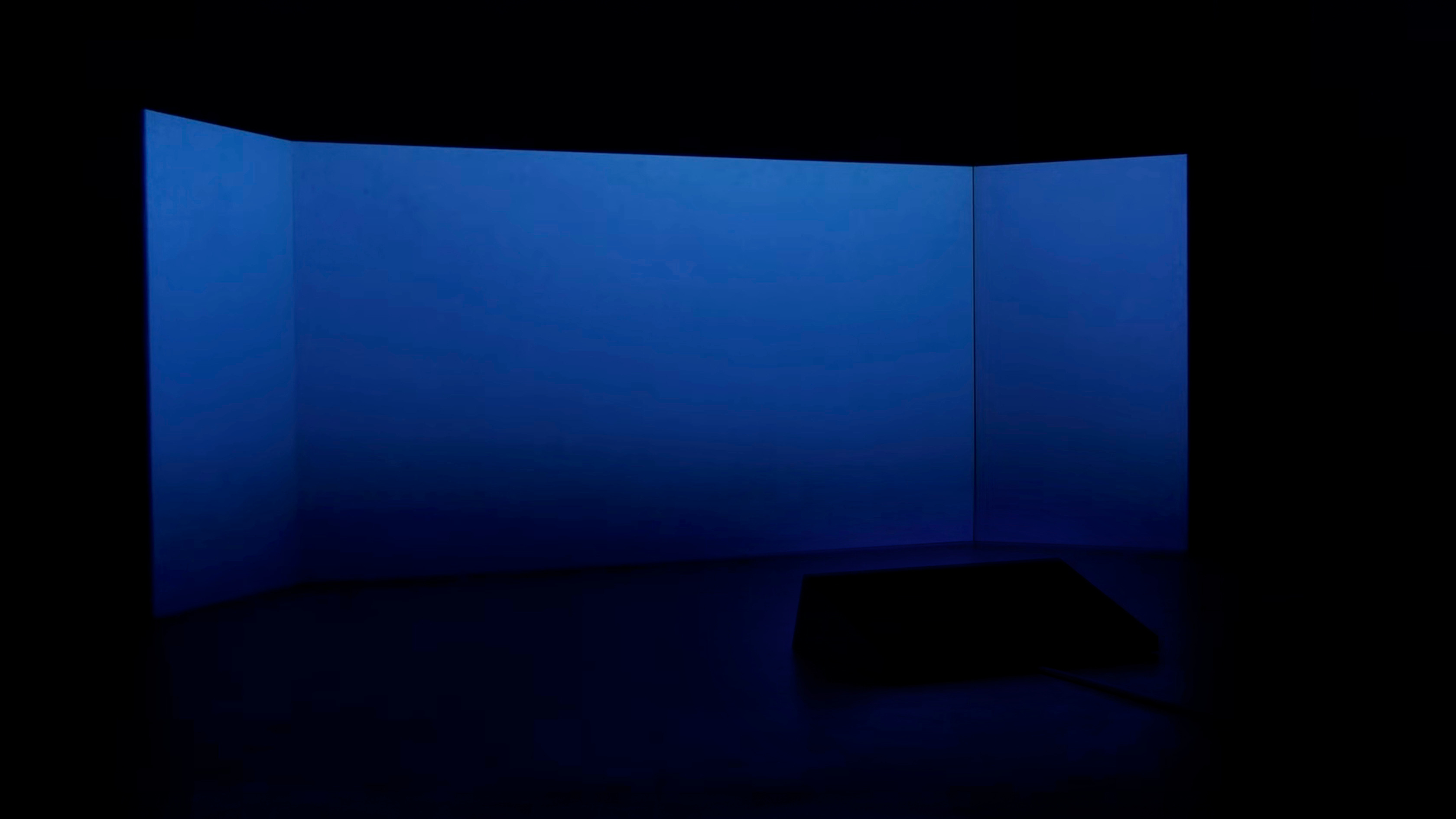
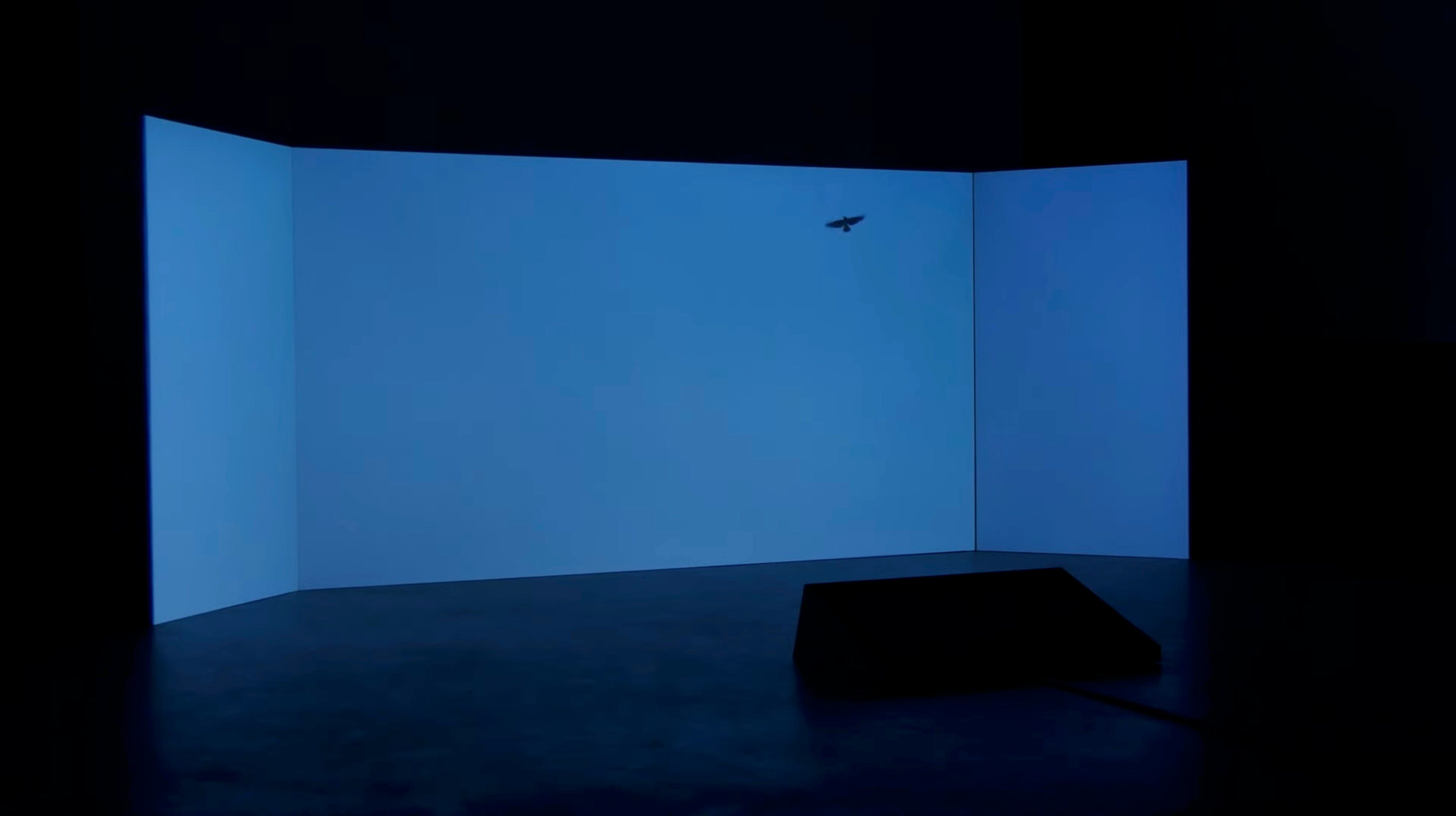
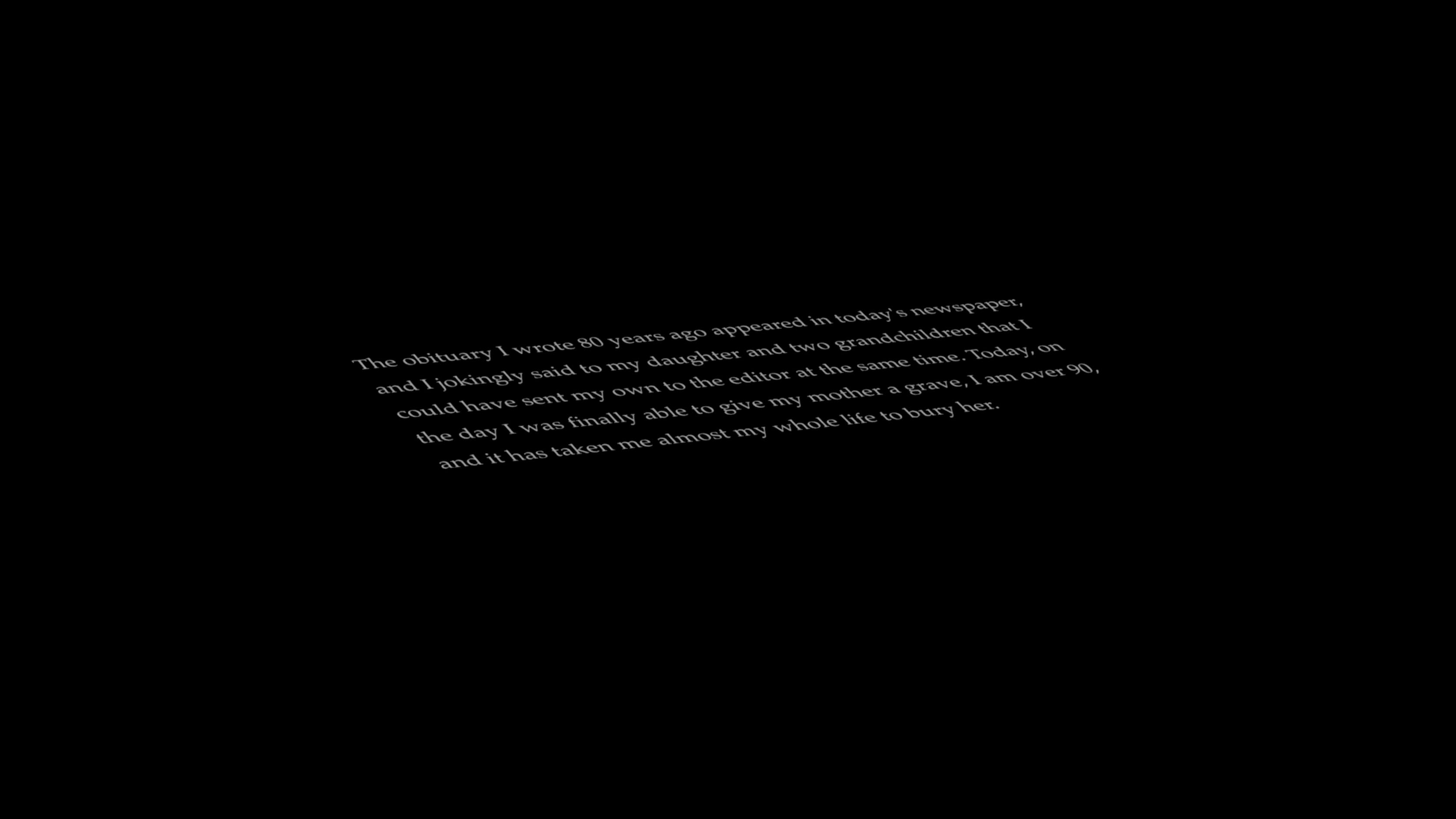
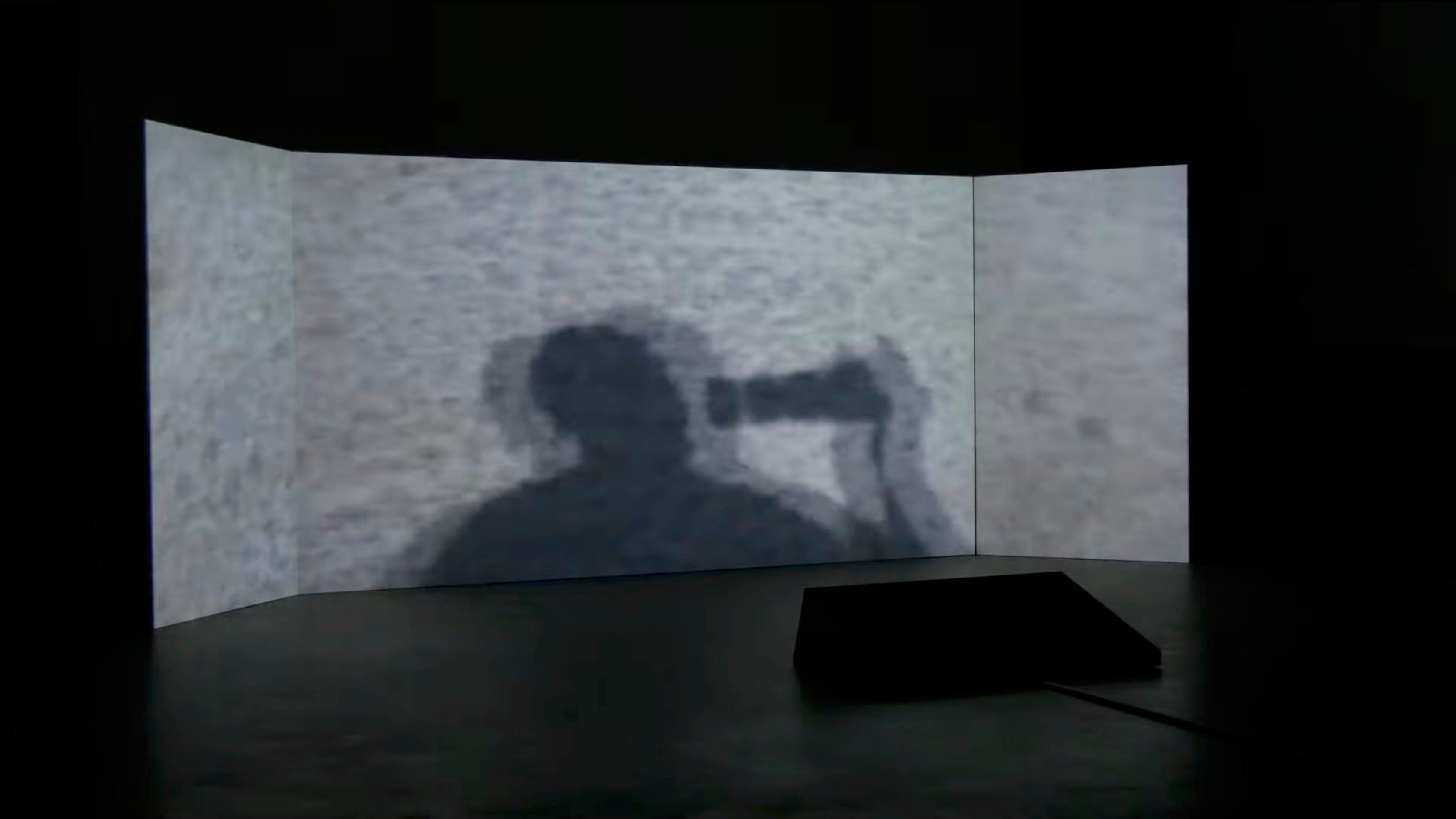
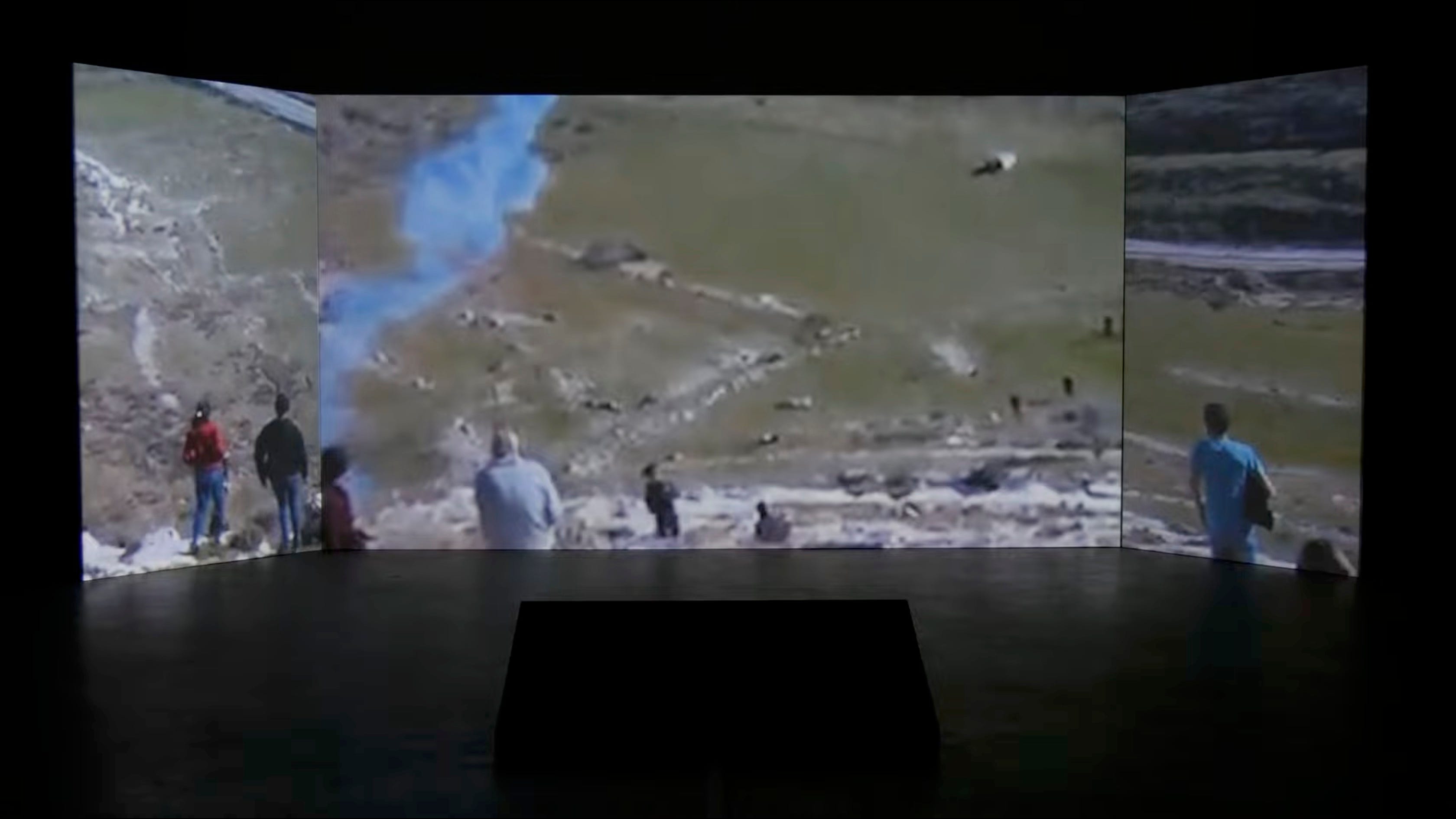
A triptych of projector screens stands before a prompter screen - turned towards the audience, rather than the stage. A dense, blue band of pixels pulses across the three-part screen, accompanied by an eerie electronic soundtrack. There is something present; it might be a lake or a sea, but I am watching too closely to distinguish anything, and the absence of reference points leaves me adrift along the water’s surface and the video compression artefacts. I remain in place for a minute, until the hypnotic state is abruptly broken by the end of the video. At that moment, text begins to appear, letter by letter, on the prompter:
“The obituary I wrote 80 years ago appeared in today’s newspaper, and I jokingly said to my daughter and two grandchildren that I could have sent my own to the editor at the same time. Today, on the day I was finally able to give my mother a grave, I am over 90, and it has taken me almost my whole life to bury her.”
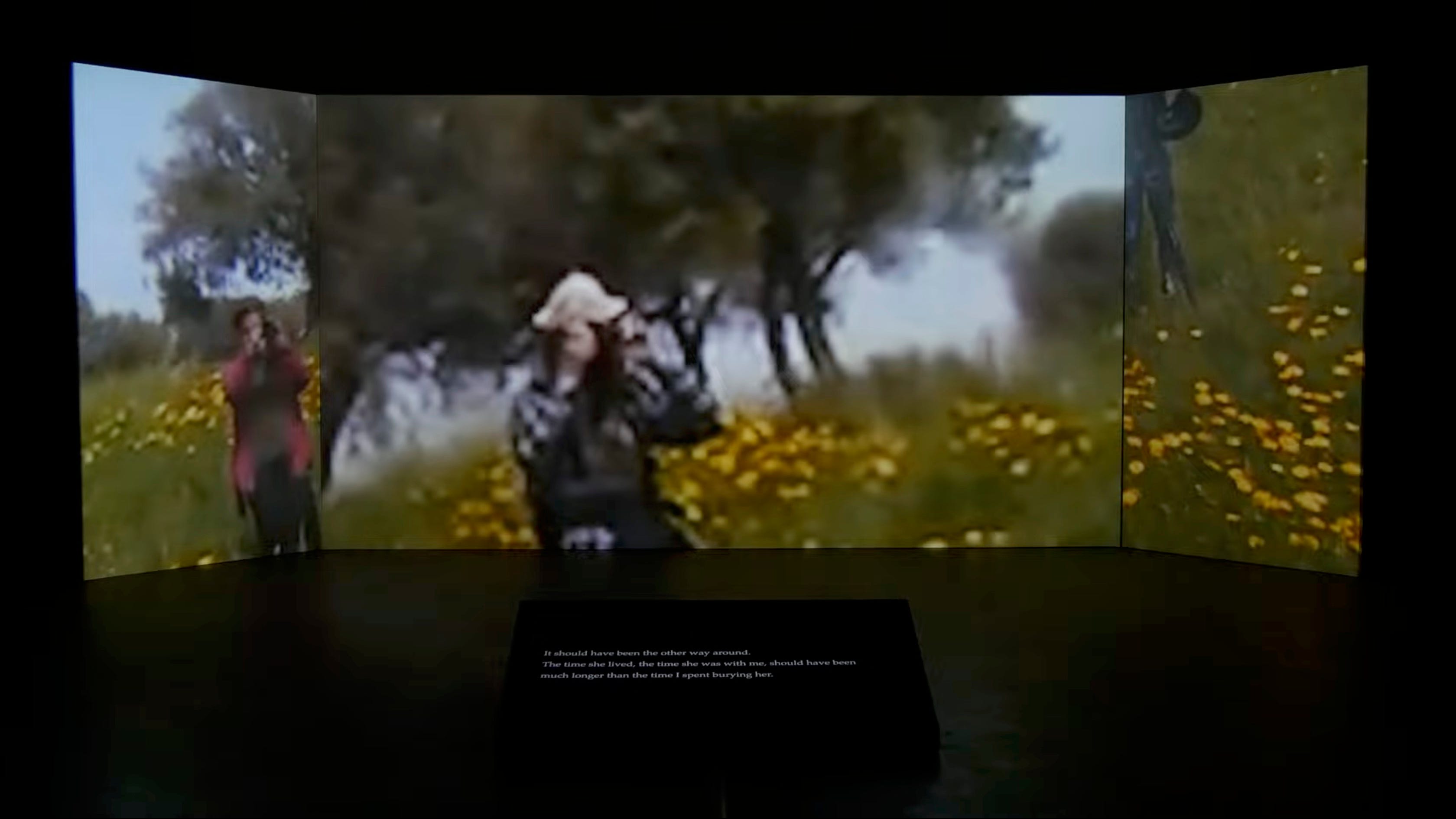
Christine Krammer’s SUB is a 12 minutes four-channel video installation, looping on three projector screens and a monitor, presented at the Art Academy of Hamburg (HFBK) in July 2025. Like many works by the 29-year-old Austrian multimedia artist, it appropriates and recombines found footage, condensing it into a collage that exposes the fragmentary and processual nature of the medium. Moving between moving images, photography, and archives, Krammer explores how images generate meaning and shape the processes of memory, examining the practice of collecting, archiving, and re-enactment of visual traces.
In SUB, found footage is assembled not only along a temporal axis, but also spatially, juxtaposed across the three projected panels. The same video fragments, with the side screens desynchronising from the central image; glitches and blank sections are interspersed among the various materials, mirroring the fragmented fictional story told by the prompter about a woman’s quest to obtain official recognition of her mother’s death (the text is written by Krammer’s collaborator Astor Roth).
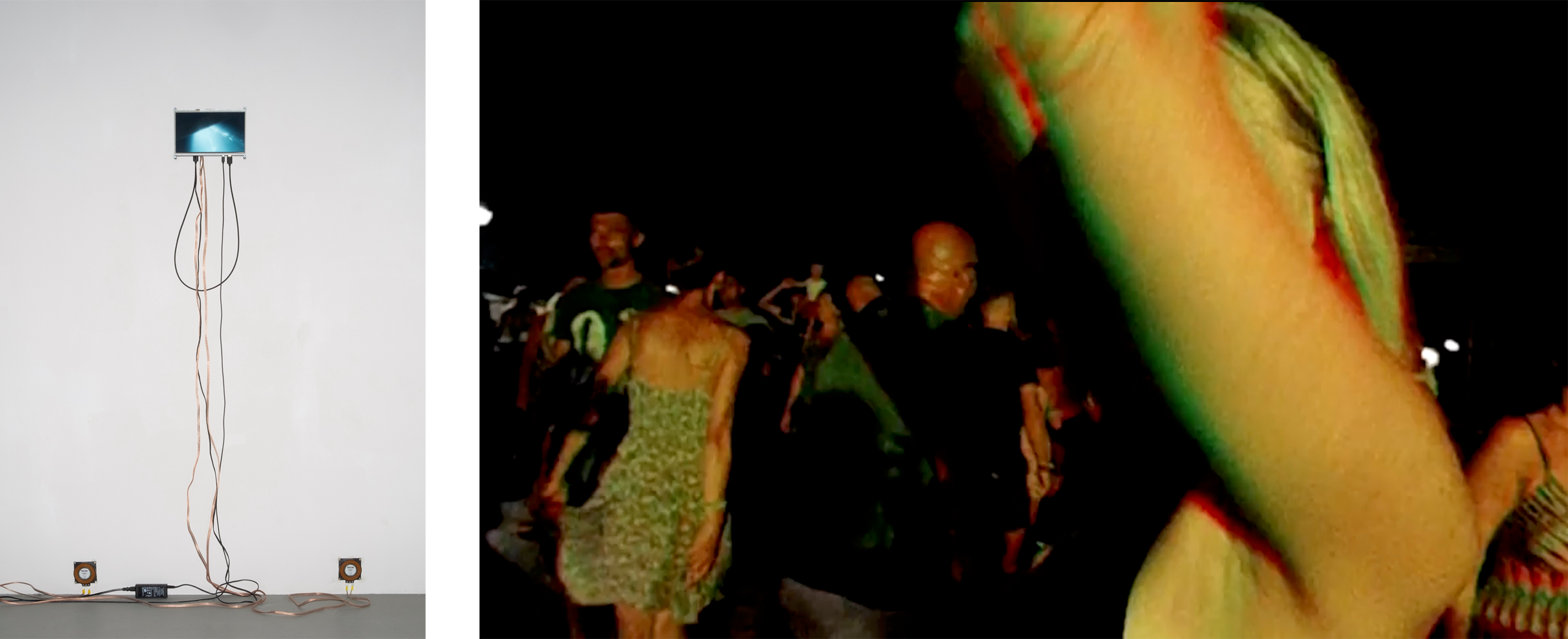
The work strongly resonates with a previous piece by Krammer I saw in Hamburg the year before. It Will Take Years to Undo the Steps I Will Take Today (a 11 minutes video loop played on a small monitor mounted without casing on the wall) examined the personal digital archive as a site of production and the practice of found footage film. The result was a pastiche of plausible narratives in which the private becomes public, raising questions of accumulation, selection, composition, and decay that reach beyond the personal sphere, interrogating these dynamics in both private and institutional archives.
What I wanted to discuss with Christine Krammer about in this interview, is the role of the archive not merely as a storage location, but as a medium for reflecting on time, memory, and cultural practice. It left me wondering: what constitutes the fabric of collective memory in our post-photographic, media-saturated age?
Davide Lanza: Your work production spans from film, to photography, and lately towards multimedia installations assembling found footage from different sources. Is it just a coincidence or is there a reason for this shift?
Christine Krammer: I suppose it was an unconscious way of following my interest in the moving image as an artefact. Working with it in an installation allows me to explore its physicality, even when this seems to contradict the nature of the digital image.
D.L.: When you speak of an archive, what does that term mean to you personally, and what draws you to it as an artistic medium?
C.K.: I think we are all constantly dealing with archives in our daily lives. Central to my understanding of the archive is the moment at which archiving occurs. According to Derrida, the archival process begins with the imprint; the moment ink touches paper. This idea can also be transferred to the digital sphere. The instant of archiving begins with capturing, in German festhalten, which I find to be a beautiful word to describe this process: holding on to a thought, a moment, an image. The need to hold on to something for later is inherently human. Artistically, this is what interests me. Through acts of authorship meaning and original intent are continually renegotiated. As an artist, and therefore as an author, I find myself asking: what do we do with images?


D.L.: Is it possible then that there is no such a thing as non-archival material? That non-found (archival) material cannot exist for audiovisual media?
C.K.: It depends on whom you ask. I am sure that many filmmakers working in narrative cinema, who carefully direct every small detail of a shot, would be enraged by this question, and rightfully so. However, I regard every staged image as a form of testimony: first, in the sense that it testifies to the fact that the actor was there and performed; and second, in the sense that the image itself becomes a testimony over time. With the passing of time, it begins to testify to societal norms, conventions, or even to the aging of cities and actors. This sense of historical hindsight is necessary for material to become “archival,” although the term itself remains vague. In summary, I would say that there is such a thing as non-archival material, yet the potential to become archival over time is already embedded within it.
D.L.: Archives can be public and impersonal, like stock footage or institutional collections, others deeply private and personal. Do you see a fundamental difference between the impersonal archive and the private testimony, or do these boundaries begin to blur when you use archival materials as source pools for your video work? In your experience, does the act of weaving these materials into a work amplify their differences or cause them to dissolve?
C.K.: I am speaking strictly about my own practice, since I am not an archivist but a video artist. In my work, I perceive a difference between various types of archives, and this distinction is precisely what interests me, especially in relation to the question: what is worth preserving, and what is my role in that process? By weaving together material from different sources, the hierarchies established by prior acts of selection, and therefore exclusion, within institutional archives are challenged. At the same time, it is I who selects, arranges, and excludes, thereby creating a new hierarchy by deciding which material is granted a second life within a new work. A new order emerges. I would not claim that the differences between these materials are dissolved, but rather that they are brought into view.
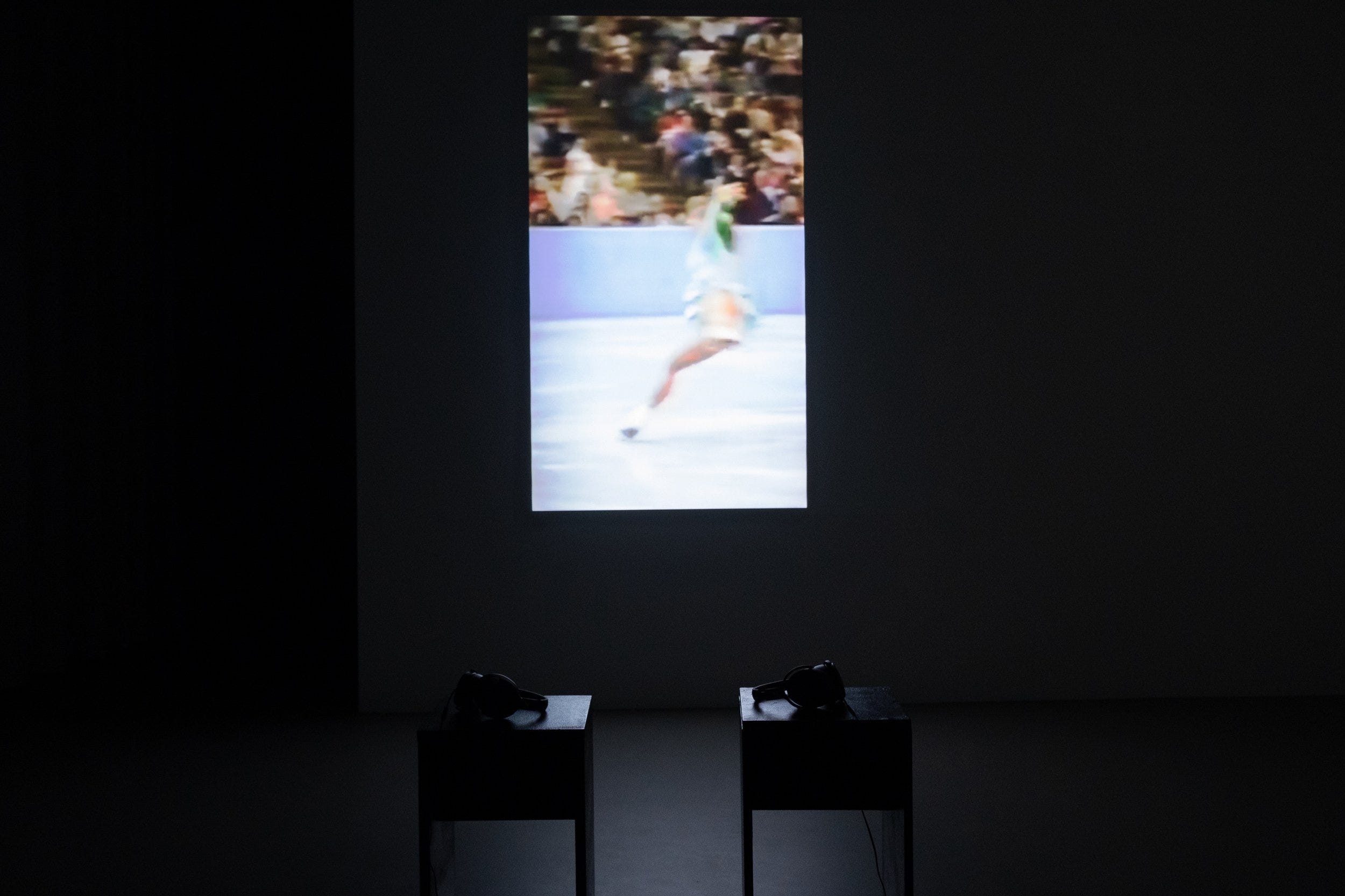
D.L.: In your practice, digital archives often evoke a spectral presence - a sense of lingering, unresolved material and memory. The vastness of online storage can feel like a set of digital graveyards, where countless video files are generated, duplicated, and ultimately disappear into the static of Fontcuberta’s “iconic avalanche”. These files hover in a state of suspension, occasionally resurfacing from obscurity to be reanimated or recontextualised. In works such as those we’ve discussed, as well as RIP (2023) - your video loop exploring the afterlife of found footage - there seems to be a strong connection between the condition of digital memory and human existential anxiety. How do you see these themes coming together in your work? Do you perceive this haunting quality of digital memory as a source of unease, or as an opening for creative possibility?
C.K.: In a sense, I regard the shift to digital memory as a climax of human existential anxiety and archive fever. Conserving images, keeping them safe, preserving them as testimony of a world that once was, is ultimately a task bound to fail.
If this is not the answer, I return to the question I posed at the beginning of this interview: what to do with pictures? Redistributing, reusing, and altering them is a way to engage with their haunting and unruly qualities. This approach is based on creation, reflecting on the passing of time itself, rather than on mere preservation.
In my work RIP, the themes of digital memory and the unruly, haunting quality of the digital image are central. The title RIP plays both on the Latin phrase requiescat in pace (“rest in peace”), commonly used in funeral rites, and the verb “to rip,” which in computer slang describes the transfer of digital files from one storage medium to another.
This play on words encapsulates my approach to working with the photographic medium: phrased as an imperative; “Rest in peace!” it expresses the wish to lay the remains of the past to rest, while simultaneously acknowledging the impossibility of this task. The act of conservation, saving, copying, describing, transforming, makes one an active participant in the very process one is attempting to complete.
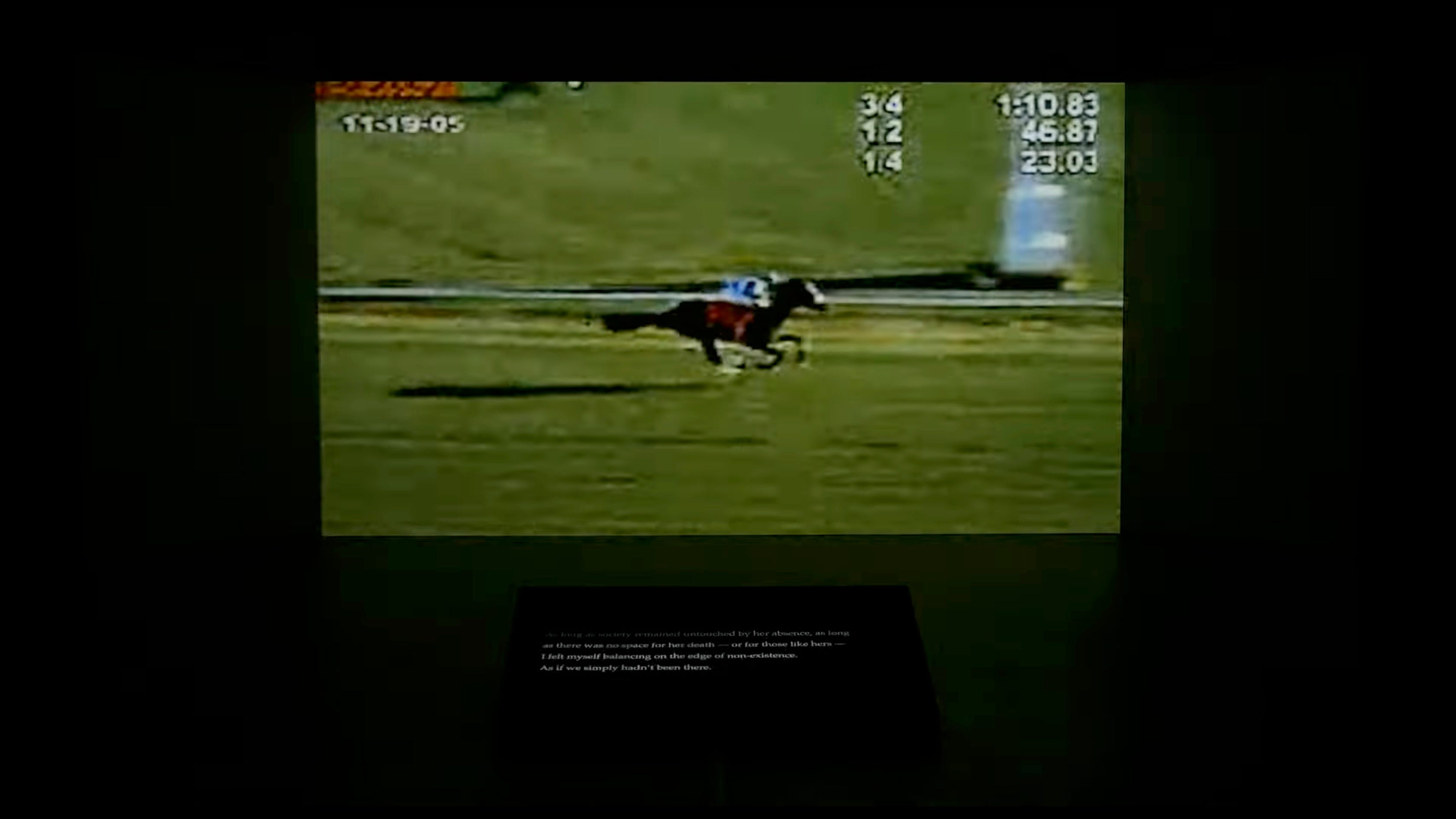
D.L.: In SUB, the prompter narrative turns on the quest for proof and recognition of existence: the woman’s lifetime spent securing a grave for her mother and her thoughts on whether becoming a parent might itself be an attempt to leave evidence of her own existence. This resonates for me as an echo of the underlying anxiety surrounding lost media. The line, “We were not granted death. (…) After her life was taken from her, death was taken from her”, encapsulates the peculiar state of lost media - works that, no longer claimed by author or owner, drift through a digital hyperspace made of internet portals, faulty hard drives, and end-of-life storage servers. While audiovisual media strives to capture and preserve life, the result often becomes a spectral collection of phantom traces, increasingly untethered from their origins - existing in a liminal state of non-authorship and non-reproduction. In this context, I wonder: does the artist take on the role of archaeologist, salvaging such fragile contents before their inevitable disappearance, or are they a kind of manipulator, zombifying video material into new meanings, now entirely detached from their original reality? To what extent does the artist become caught up in this Sisyphean cycle of creating and forgetting? “One must imagine the author happy”?
C.K.: Concerning the first question, whether one acts as an archaeologist or a manipulator, I would say: a bit of both. Leaving aside, for a moment, the broader question of what to do with images, I would like to focus on these two roles in relation to how we acquire images in the digital realm. This might be the point at which we ask ourselves: what is found footage? Is it actually possible to “find” it? Or am I searching for something very specific, going to the right places, entering the right search terms, in order to support a claim I already have? When we raise the question of manipulation, how neutral is the digital realm with algorithmic search engines anyways? The archaeologist digs, browsing and looking for something valuable, and he knows where to dig, right? On the one hand, there is an impulse to salvage: to prevent images from disappearing, to give them a second life. On the other hand, the very act of selecting, editing, and assembling already intervenes. By working with found footage, the author’s actions; what they search for, select, sort, and assemble, expose a range of choices and, with them, the forms of power the author is able to exercise. Returning to the artist’s role, the challenge is to find a way to deal with that power: to question it, and to incorporate it into one’s work. That is at least how I approach it.
My work SUB deals with a woman who does not exist, who has no voice. Her voice only appears on a prompter, in subtitle-like text. The work directly addresses the underlying violence inherent in the relationship between the one who reports (the author, artist, or journalist) and the one being reported on. The woman cannot speak for herself; it is through the artist that she speaks. Exploring this gap helps me shift the question of conservation toward the question of power. At the end it is still I, the author, who have the honorable task of pushing the rock.