

Exorcising Uncanny Spirits
Rethinking the Aesthetic Category of the Unheimlich

How can we explore the aesthetic and philosophical dimensions of the uncanny in photography and film through contemporary theory? There is a psychoanalytic interpretation of the uncanny, but is it enough? Is there a way to broaden the Freudian perspective on the unheimlich? While trying to answer these questions, this piece positions itself as a theoretical introduction to a series of thematic articles here on YO-ME 読め engaging with hauntology, the aesthetics of emotional spaces, and the subtle mechanics by which images and narratives unsettle our sense of the familiar.
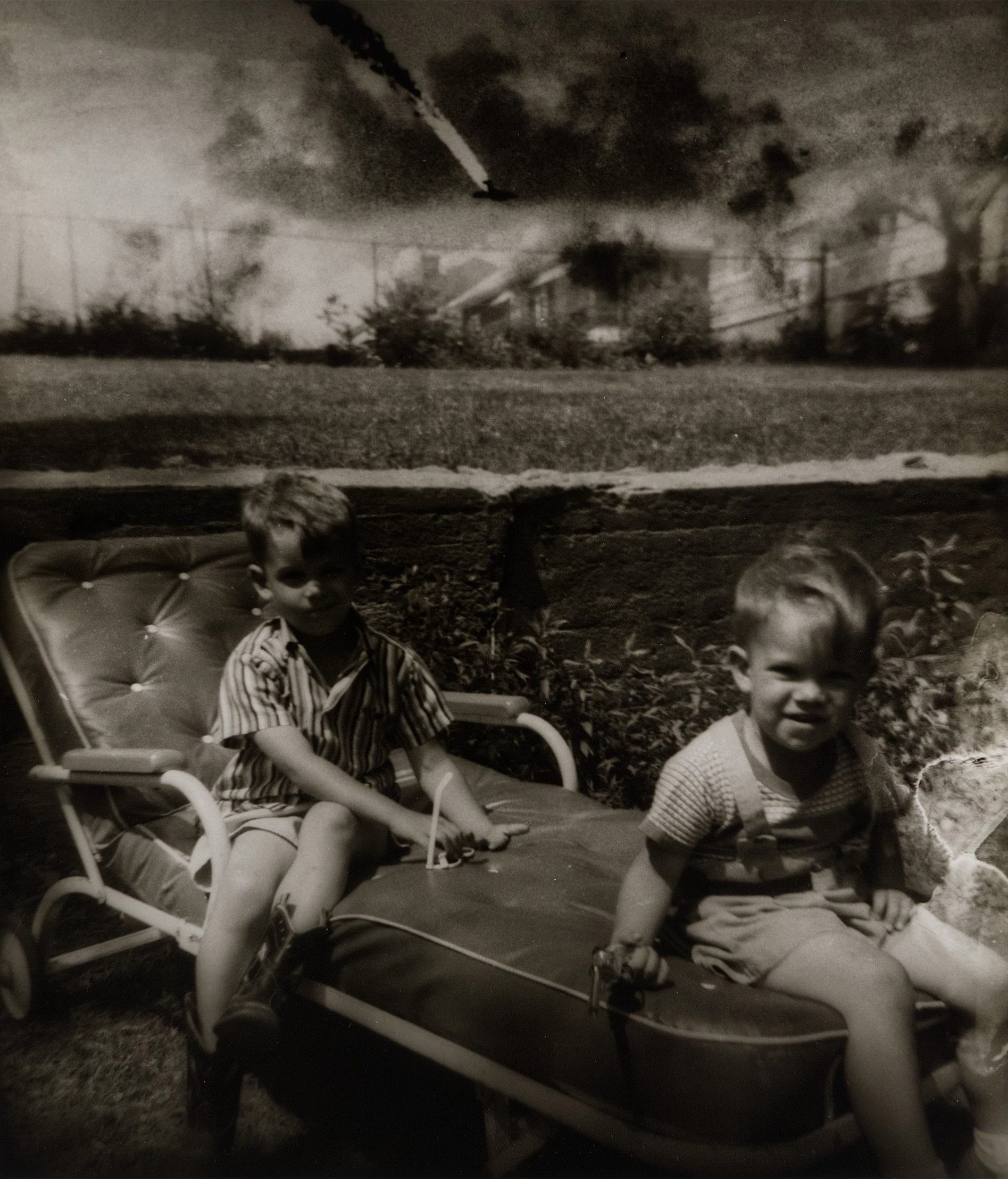
It sometimes happens that, on a spring day, a passing cloud momentarily veils the sun. During that brief interval, the serene and carefree atmosphere is suspended, and a gloomy grayness blankets the world. Happiness dims, the festive air disperses into nothingness, while a dark haze transfigures the landscape. Then, the cloud moves on, sunlight reemerges, and joy is restored to things.
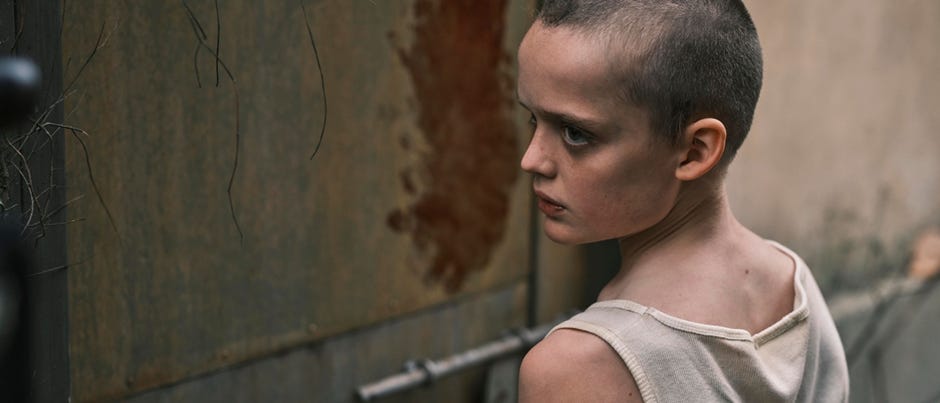
A similar inner movement occurs in the spectator at Oliver’s first appearance in Bring Her Back, the recent horror movie by brothers Danny and Michael Philippou. The two stepbrothers, Andy and Piper, are exploring their new house, guided by their temporary foster mother, Laura, when their arrival near the swimming pool drastically alters the film’s emotional tone. From the outset, the place is shrouded in a sinister aura: it is there that Cathy – Laura’s recently deceased daughter – drowned. All that remains of the pool is an empty concrete shell, exposed to the sky, waiting for an accidental rain to fill it again. And there, at its center, stands the androgynous figure of a child with a lost and vacant gaze. His facial features are delicate, and his short blond hair sketches a meek, almost submissive personality.

Laura, with a background in psychology, offers the newcomers a rational and convincing explanation: Cathy’s death has traumatized Oliver – this is the boy’s name – so deeply that it has produced a case of selective mutism persisting over time. Yet this rationally persuasive attempt to domesticate the strangeness that the spectator senses soon collapses. Something dwells within Oliver – something dark and supernatural – that provides the key to understanding both his disturbing behavior and Laura’s emotional eccentricities. The film masterfully intertwines the drama of loss and the difficulty of mourning, cloaking them in a spectral and terrifying mantle worthy of the finest horror productions.
Throughout the film, an aura of strangeness circulates – first surreptitiously, then ever more visibly – in a crescendo that culminates in otherworldly horror. Yet, if we confine ourselves to the scene described, what exactly signals the strangeness here? Oliver stands motionless – senselessly – in the middle of an empty pool. At the same time, he behaves in a way that is out of the ordinary, driven by an unsettling inner impulse, by something that inhabits him deeply. The film is suffused with strangeness, but a peculiar kind. In both cases, there is something where there should be nothing – or, at least, where it should not exist in that way.
A strangeness that leaves the viewer uneasy also because, in the end, no detailed explanation is provided. No systematic account, no rationalization, no exhaustive solution. Only scattered hints – enough to satisfy the viewer’s desire for mystery and fright, but certainly not the scientist within each of us. The film, in conclusion, is dominated by a strangeness that bears the hallmarks of the eerie.
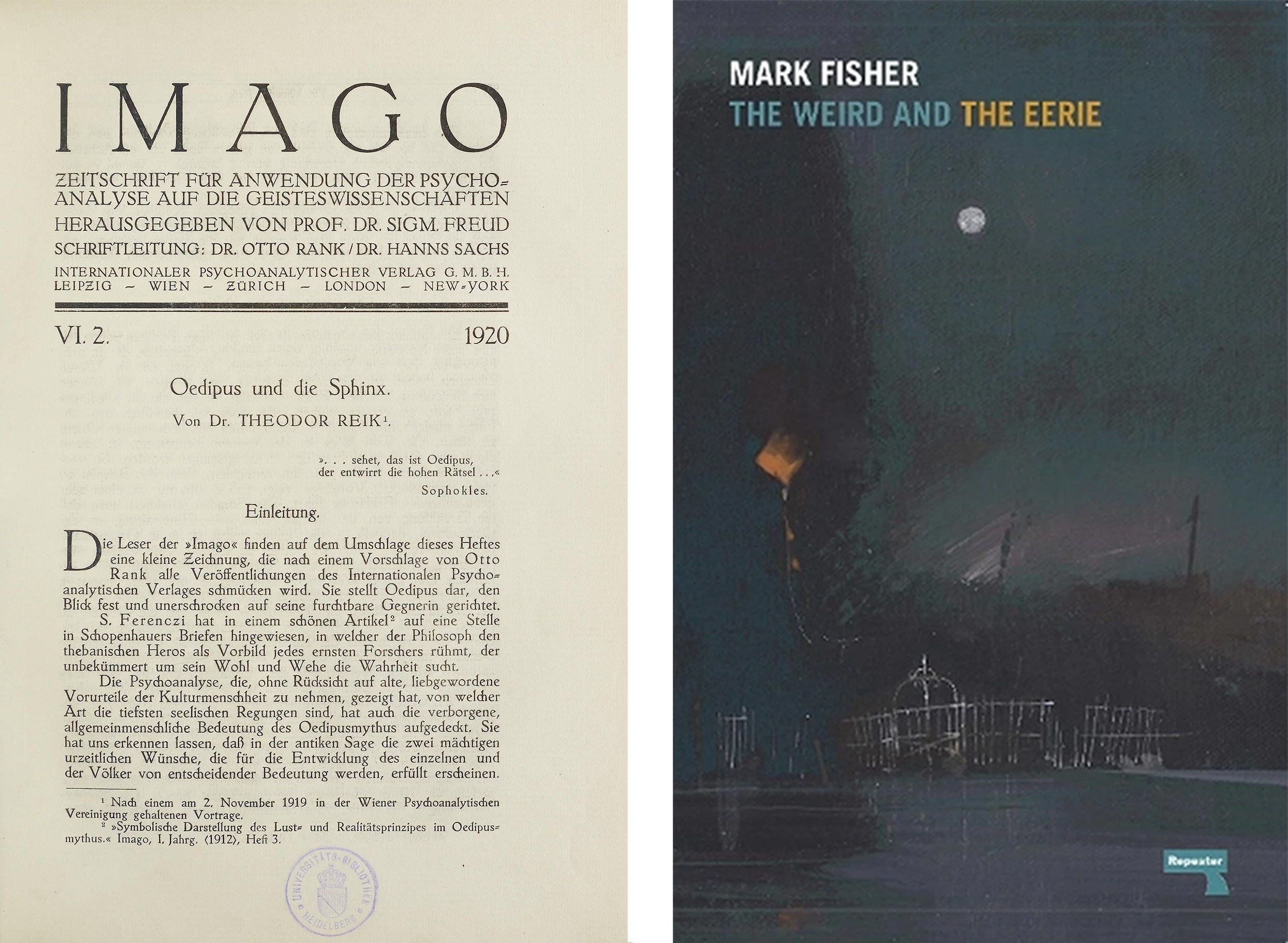
It was Mark Fisher, the English philosopher, who revitalized aesthetic reflection on the strange and the unsettling through his invaluable book The Weird and the Eerie (2017), published shortly before his tragic suicide. But let us proceed step by step.
For a long time, philosophical vocabulary had been anchored to the concept of unheimlich. The word emerged within German Idealism, with Friedrich Schelling, and later entered Sigmund Freud’s psychoanalytic reflection through the mediation of psychologist Ernst Jentsch. Freud’s 1919 essay – entitled Das Unheimliche – examined the psychological phenomenon that occurs when an event or a person/object is perceived by the subject as oddly familiar, that is, both familiar and strange at once, generating an unsettling sense of discomfort and confusion.
In a context we perceive as familiar – where we move with confidence and ease – an unheimlich element suddenly appears: the general picture is shaken, stripped of its familiar aura, and our previous sense of trust in that environment is called into question. It is no coincidence that the German term contains das Heim, meaning “home” or “dwelling.” In other words, the very root of unheimlich evokes unease produced by displacement and disorientation, the loss of coordinates fixed by habit. Unheimlich as uncanny and unhomely at the same time. A deeply disturbing picture, drawn from the history of unheimlich images, offers us the chance to delve more deeply into this matter.
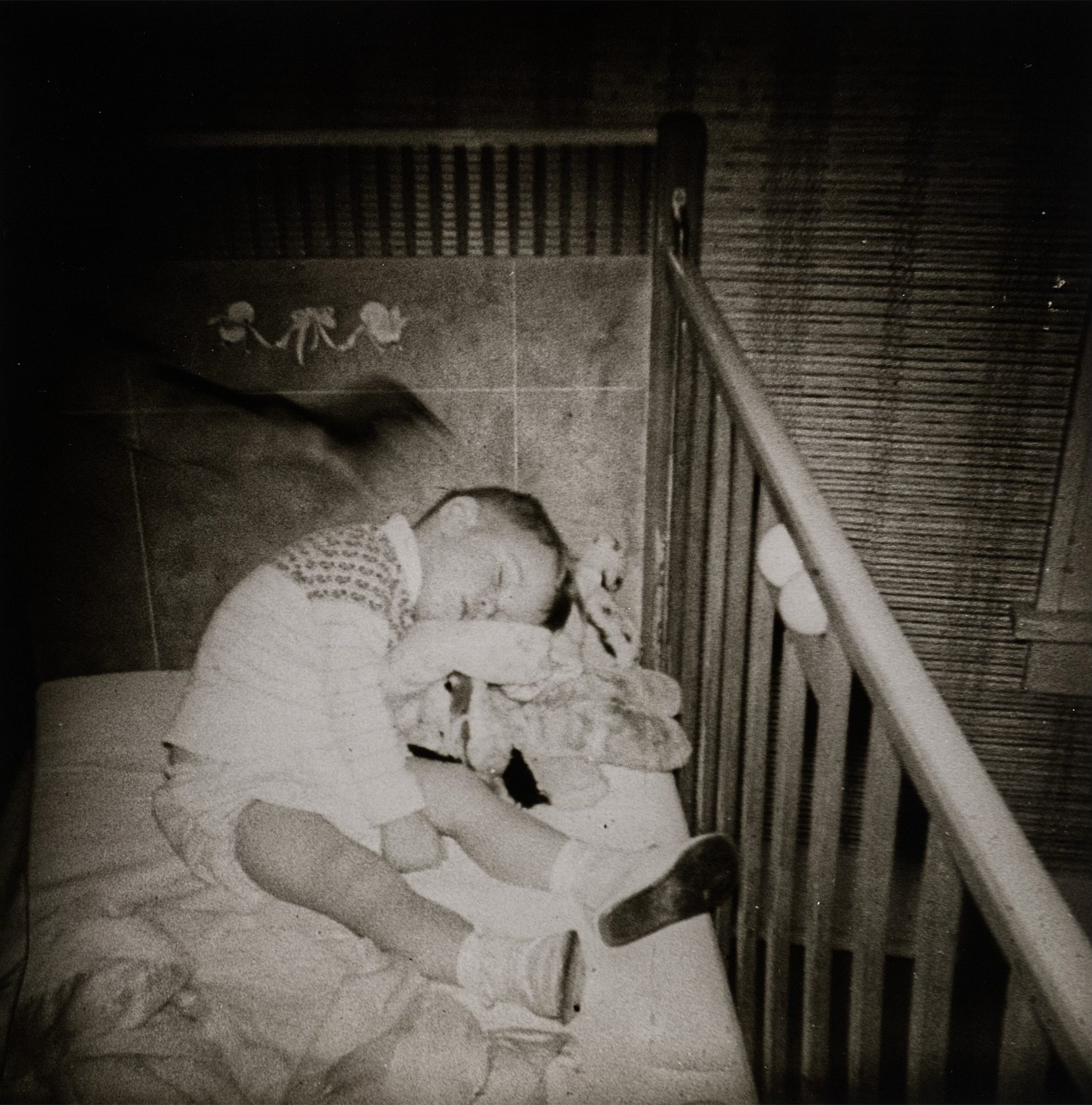
It was an ordinary day when the Cooper family decided to move into their new house. It was a significant moment for all the family members; therefore, on their first evening there, the father took a photo of the family to commemorate the occasion. The photograph was intended to be a typical domestic image: behind the dining room table sat Mrs. Cooper and the couple’s two children, all smiling toward the camera. In essence, the photograph sought to depict the quintessential bourgeois family portrait, meant to celebrate the moment it captured. However, a week later, when Mr. Cooper went to collect the developed prints, the photograph from their first night in the new home catapulted the family into an unheimlich dimension. Amid the neatly arranged domestic scene – among smiles and maternal affection – das Unheimliche revealed itself in the figure of a very uncanny body falling from the ceiling. When this image first appeared on November 14, 2009, on the forum of www.ligotti.net, it quickly acquired the grand and distinctive title The Cooper Family Falling Body Photo.
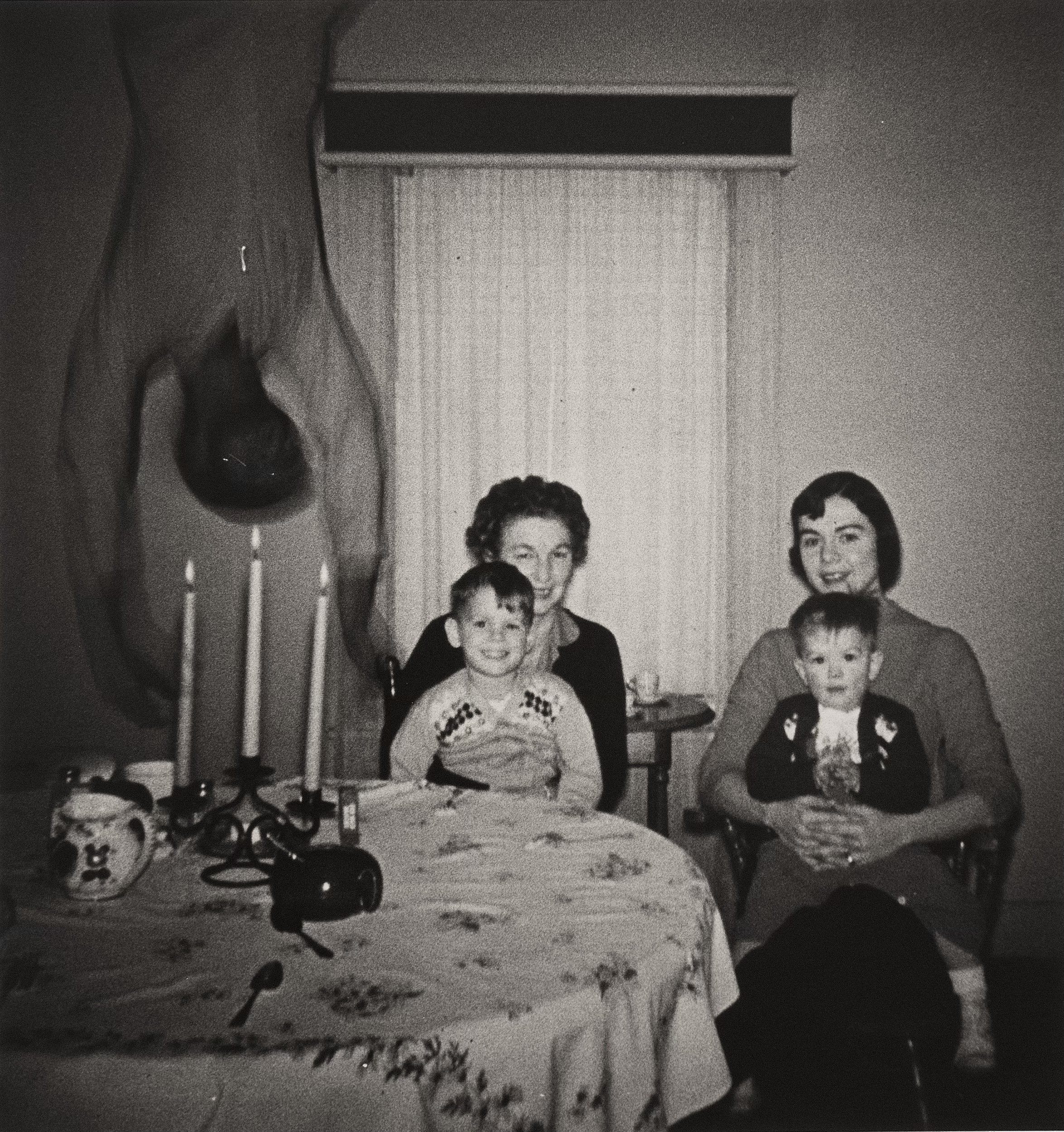
Was it an image heavily edited somehow, or was it a one-of-a-kind witness of some significant paranormal activity? In any case, the disquieting presence of a ghostly corpse descending from the ceiling was enough to shatter the supposed serenity of the domestic scene. Everything was in its place – except for one thing, the falling body – but that single anomaly was sufficient to redefine the coordinates through which to interpret and perceive the image. In perfect accordance with Freud’s insight, the Unheimliche arises when the domestic world ceases to coincide with itself. But how, then, does the story end?
The persistent interest in this picture eventually gave rise to various debunking attempts regarding its authenticity. Compared to other urban legends, this photograph proved to be a more complex iconic enigma. However, as YouTubers Jeffiot and Eduardo Valdés-Hevia have shown, the image ultimately turned out to be nothing more than a philosophical experiment by Richard G. Ramsdell, an ex-teacher at the Ringling College of Art and Design and a scholar of aesthetic postmodernism. To the disappointment of every true horror enthusiast, after a tortuous process, the uncanny element was dispelled by a rationalistic reconstruction of the case. The familiar coordinates to which we had grown accustomed proved sufficient to reabsorb and neutralize the aesthetically subversive charge of what is unheimlich.
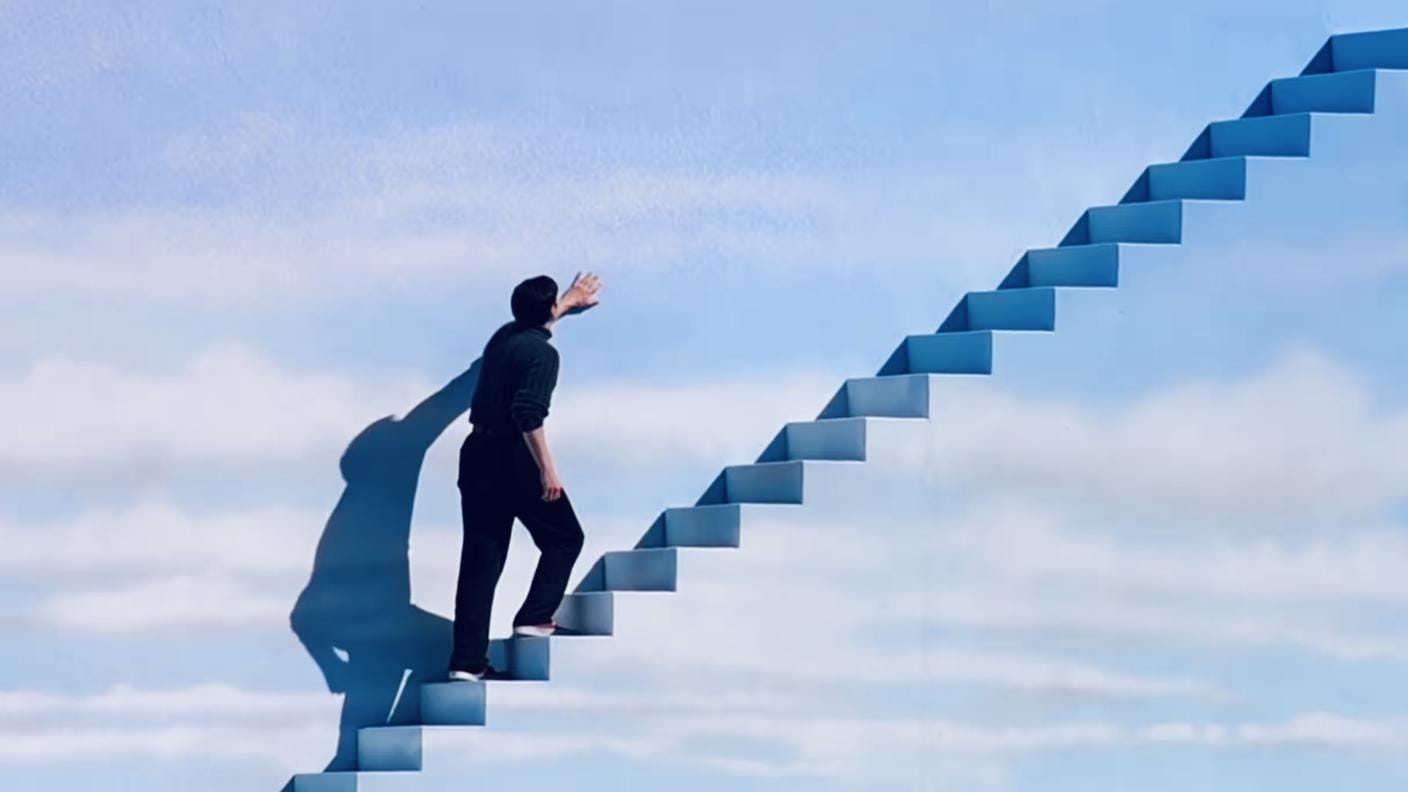
To further clarify this point, let us recall Peter Weir’s 1998 film The Truman Show. Truman Burbank, the film’s protagonist, does not know that he is living an artificial, entirely fabricated life, as part of a collective performance in which he is the only unaware actor. From birth, he has been immersed in a world wholly constructed around production requirements, and even his wife and closest friends continuously feign their feelings toward him. Gradually, a constellation of causes gives rise in Truman to the suspicion that he is being watched and controlled. The spiral of doubt intensifies until Truman begins to distrust the entire social reality around him, eventually uncovering the deception that underlies his existence. The sense of certainty and safety once offered by his familiar world turns into disorientation, anguish, and a loss of identity when that same world becomes alien and, therefore, disturbing – both uncanny and unhomely at the same time. But what explanation is offered for this unheimlich story? Simply that the capitalist mechanisms of the culture industry demanded a reality show so extreme that it required the protagonist’s total and unconscious immersion.
The examples discussed, while clarifying the notion of unheimlich, also expose its limitations. The strange, out-of-place element that disrupts the equilibrium of the familiar sphere ultimately ends up being reintegrated into it. During the second half of the last century, radical philosophers – Marcuse, Deleuze, and Fisher, among others – have accused Freud’s psychoanalysis of domesticating desire rather than allowing it to express itself fully. In the same way, Freudian aesthetics fixates on the unheimlich – on the bizarre, the estranged, the dislocated, that which disrupts habitual coordinates – yet ultimately extinguishes its subversive power. The supernatural dissolves into a rational explanation; the unheimlich dimension is reduced to the familial Oedipal relation; the contestation inherent in unheimlich art is leashed and rendered docile within the reassuring form of reconciled art.
Yet this tension between disruption and domestication is precisely what makes the unheimlich a fertile ground for inquiry. By opening rather than closing the question – by resisting the urge to fully explain, rationalize, or resolve – the unheimlich invites us to examine the subtle mechanics by which images, stories, and experiences unsettle perception. Within YO-ME 読め, this is intended as just a starting point, a theoretical primer for a series of explorations into hauntology, the aesthetic of emotional spaces, and the ways contemporary visual culture confronts, challenges, and expands our understanding of the familiar as necessary correlative of the uncanny.
It is time for us to move on.
References
Fisher, Mark. The Weird and the Eerie. London: Repeater Books, 2016.
Freud, Sigmund. “Das Unheimliche”. Imago: Zeitschrift für Anwendung der Psychoanalyse auf die Geisteswissenschaften, no. 5–6 (1919): 297–324. (source)
Jeffios. The Story Behind This Perfectly Normal Photo. YouTube video. (source)
Ramsdell, S. Cooper Family Series. (source)